A Complete Guide to Thermic Fluid Heaters (EPT Series): Working, Benefits & Industrial Applications
TL;DR
- A Thermic Fluid Heater provides indirect, high-temperature heating without generating steam or high pressure.
- The thermic fluid heater working principle relies on circulating heat transfer oil in a closed loop.
- Compared to steam boilers, thermic fluid systems offer better temperature control, lower maintenance, and improved safety.
- EPT Series Thermic Fluid Heaters are designed for consistent performance, energy efficiency, and industrial reliability.
- Widely used across chemical, textile, food, pharmaceuticals, and manufacturing industries.
Introduction: Why Industrial Heating Systems Matter
Industrial processes often depend on accurate and stable heat delivery. Whether it is drying, curing, chemical reactions, or material processing, inconsistent temperatures can affect product quality, energy consumption, and operational safety.
This is where industrial thermic fluid heaters are commonly used. Unlike steam-based systems, thermic fluid heating systems provide high temperatures at atmospheric or low pressure, making them suitable for applications where precise control and reliability are critical.
This guide explains how thermic fluid heaters work, their design, advantages, and why the EPT Series Thermic Fluid Heater is widely selected for industrial heating requirements.
What Is a Thermic Fluid Heater?
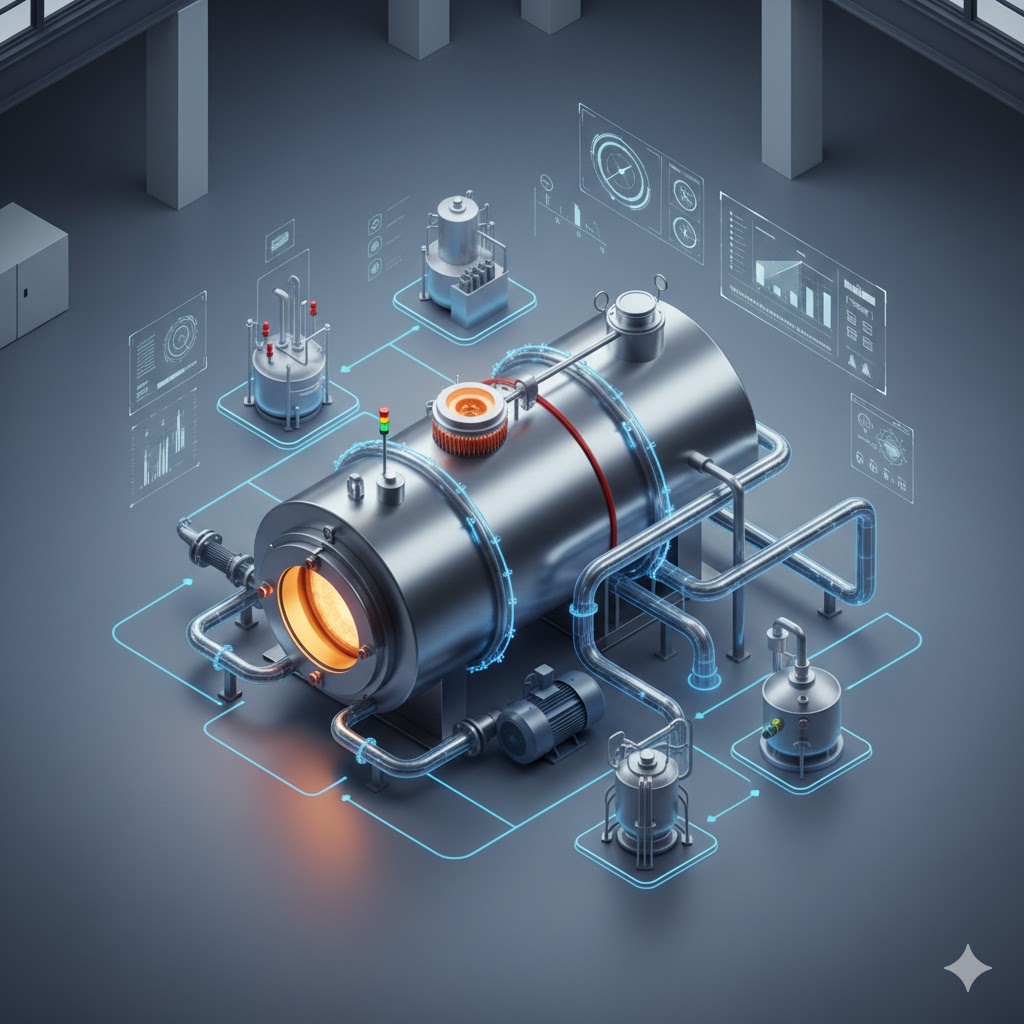
A Thermic Fluid Heater is an indirect heating system that uses a heat transfer fluid, typically thermal oil, to deliver heat to industrial processes. The fluid is heated in a closed-loop system and circulated to heat users such as reactors, dryers, heat exchangers, or processing equipment.
Because the system does not generate steam, it avoids high operating pressures while still achieving temperatures up to 300°C or higher, depending on the fluid used.
Key characteristics:
- Indirect heating system for industry
- Closed-loop circulation
- High temperature at low pressure
- Uniform and controllable heat transfer
How Does a Thermic Fluid Heater Work?
Thermic Fluid Heater Working Principle
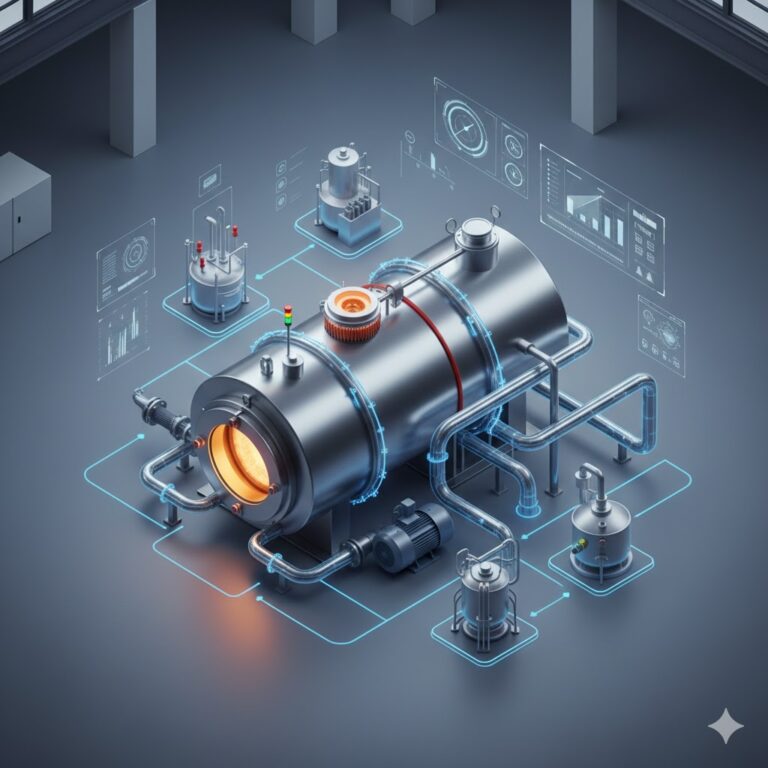
The thermic fluid heater working principle is based on indirect heat transfer using a circulating thermal fluid.
- Fuel combustion occurs in the heater furnace.
- Heat is transferred to the thermic fluid through coils or tubes.
- The heated fluid is circulated by a pump through the process equipment.
- Heat is transferred to the process, and the fluid returns to the heater for reheating.
This continuous thermic fluid circulation system ensures stable temperatures and uniform heating across all connected equipment.
How Does a Thermic Fluid Heater Work in Practice?
Unlike steam systems that require phase change and condensate handling, thermic fluid systems remain in liquid form throughout the process. This simplifies system design and improves temperature control, especially in applications requiring constant heat over long durations.
Thermic Fluid Heater Design & System Components
A typical thermic fluid heating system includes the following components:
- Heater Coil: Transfers heat from combustion gases to the thermal fluid
- Circulation Pump: Maintains steady fluid flow
- Expansion Tank: Accommodates fluid expansion due to temperature changes
- Control Panel: Regulates temperature and safety parameters
- Stack and Exhaust System: Safely removes flue gases
Thermic Fluid Heater Design Considerations
- Uniform heat distribution
- Optimized fluid velocity to prevent degradation
- Proper insulation to reduce heat loss
- Safety interlocks and monitoring systems
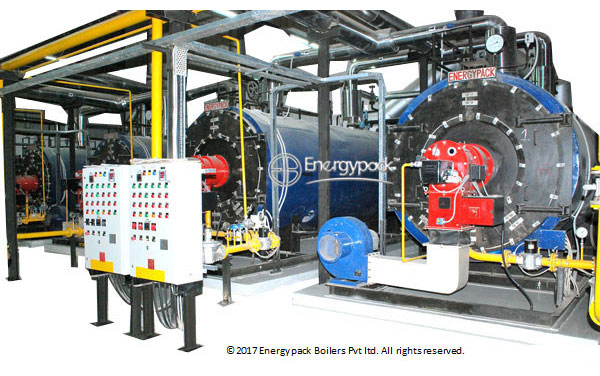
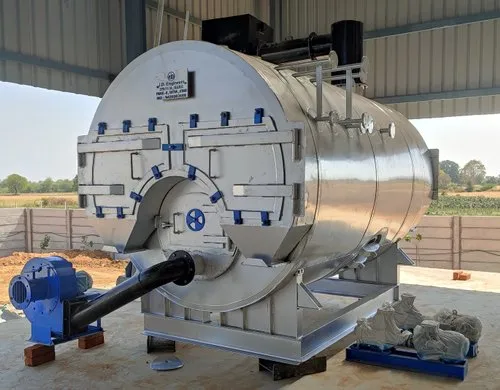
The EPT Series Thermic Fluid Heater is engineered to balance thermal efficiency, operational safety, and long service life.
Thermic Fluid vs Steam Boiler
When evaluating thermic fluid vs steam boiler, several operational differences stand out.
Thermic Fluid Heater:
- Operates at low pressure
- No water treatment or condensate recovery
- Stable temperature control
- Lower corrosion risks
Steam Boiler:
- High pressure operation
- Requires water treatment
- Steam traps and condensate management
- Pressure-related safety compliance
For industries prioritizing consistent heat and reduced operational complexity, thermic fluid systems are often preferred.
Advantages of Thermic Fluid Heaters
The advantages of thermic fluid heaters make them suitable for a wide range of industrial heating applications.
- High operating temperatures without high pressure
- Improved safety compared to steam systems
- Lower maintenance requirements
- Accurate temperature control
- Energy-efficient heating systems for industries
- Longer system life with proper fluid management
These benefits contribute to predictable performance and reduced downtime in continuous industrial operations.
Types of Industrial Thermic Fluid Heaters
Based on fuel and configuration, industrial thermic fluid heaters can be classified as:
- Oil-Fired Thermic Fluid Heater
- Uses furnace oil or LDO
- Suitable for consistent heat demand - Gas-Fired Thermic Fluid Heater
- Uses natural gas or LPG
- Cleaner combustion and easier control - Solid Fuel Thermic Fluid Heater
- Uses coal, biomass, or briquettes
- Suitable where solid fuel is readily available - Electric Thermic Fluid Heater
- Suitable for smaller capacities or emission-sensitive environments
The best thermic fluid heater for industrial use depends on fuel availability, temperature requirements, and process continuity.
Thermic Fluid Heater Applications by Industry
Thermic Fluid Heater Design Considerations
Chemical Industry
- Reactor heating
- Distillation units
- Polymer processing
Textile Industry
- Dyeing machines
- Dryers and stenters
Food Processing
- Fryers
- Ovens
- Edible oil processing
Pharmaceutical Industry
- Jacketed vessels
- Clean and controlled heating processes
Manufacturing & Engineering
- Mould heating
- Curing processes
- Heat exchangers
These applications benefit from indirect heating systems for industry where precise temperature regulation is essential.
Why Choose the EPT Series Thermic Fluid Heater?
The EPT Series Thermic Fluid Heater is designed for industrial environments that require dependable and efficient thermal systems.
Key features include:
- Robust heater coil design for uniform heat transfer
- Optimized combustion efficiency
- Stable thermic fluid circulation system
- Compatibility with multiple fuel options
- Designed to meet industrial safety and performance standards
For businesses evaluating thermic fluid heater manufacturers in India, the EPT Series focuses on durability, operational consistency, and customization based on process needs.
In a Nutshell
A Thermic Fluid Heater is a proven solution for industries requiring high-temperature, low-pressure heating with consistent performance. Understanding the thermic fluid heater working principle, system design, and application suitability helps decision-makers select the right heating solution.
Compared to steam systems, thermic fluid heaters offer simpler operation, improved safety, and better temperature control. The EPT Series Thermic Fluid Heater is built to support demanding industrial processes while maintaining energy efficiency and operational reliability.
FAQs
A thermic fluid heater is used to provide indirect, controlled heating for industrial processes such as drying, curing, and chemical reactions without generating steam.
It works by heating a thermal fluid in a closed loop and circulating it through process equipment, transferring heat indirectly and returning the fluid for reheating.
They operate at lower pressure, require less maintenance, and offer better temperature stability compared to steam boilers.
Chemical, textile, food processing, pharmaceutical, and manufacturing industries commonly use thermic fluid heating systems.
They can operate on oil, gas, solid fuels, or electricity, depending on design and industrial requirements.
Yes, the EPT Series Thermic Fluid Heater is designed for consistent, long-duration industrial heating applications.
Lorem ipsum dolor sit amet, consectetur adipiscing elit. Ut elit tellus, luctus nec ullamcorper mattis, pulvinar dapibus leo.
Lorem ipsum dolor sit amet, consectetur adipiscing elit. Ut elit tellus, luctus nec ullamcorper mattis, pulvinar dapibus leo.
Recent post